Showing posts with label wildlife. Show all posts

Thursday, May 5, 2011

Okavango

Okavango

The Okavango Delta is formed by a river coming down from the Highlands of Angola, which disappears into the deserts of north-east of Botswana, creating an inland delta. There are a few other such deltas in the world, but the Okavango seems to be one of the most remarkable and best-known examples. Flows vary seasonally and the water is crystal clear, filtered by the huge areas of reeds, papyrus, sedges and grass, and waterlilies (water hyacinth), through which wind multiple channels, many made by hippos. The area, along its borders and on the numerous bush-covered island, is home to a wonderful range of African wildlife.
Impala rams watching a lion. Once they have spotted the predators they're pretty safe
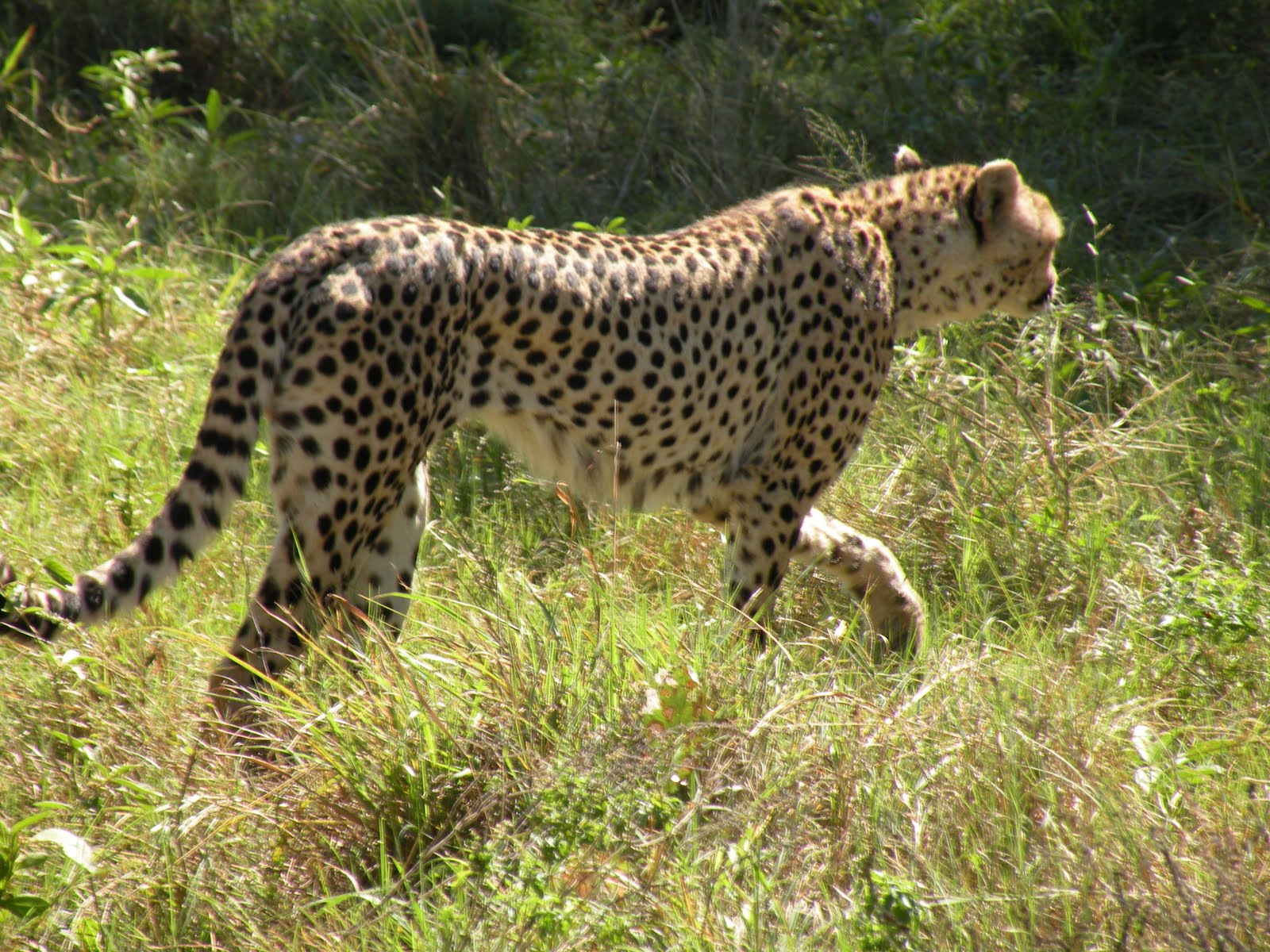
Male cheetah

Not all the wildlife are large: Diana and chameleon
Botswana itself is widely regarded as the most successful African state, although it’s a very small country with only about 1.4 million inhabitants. However, it has a functioning democracy and a government which appears to govern for the good of the country and not just for the good of the members of the government, as is the case in most African states. The towns are extremely scruffy and untidy, with rubbish all over the place – their priorities are different from those of most westerners – but the country is moderately wealthy with important diamond mines, a major beef cattle industry and a thriving tourist industry. I don’t know much about tax structures and agreements between governments and extractive industries, but it’s clear that, unlike the oil industry in various countries, the diamond mines in Botswana pay enough to the country to benefit everyone and not just the companies doing the mining. Tourism is what’s called “low-volume”, which really means that Botswana is generally too expensive for student backpackers and young people on limited budgets, since it involves guided safari-type tours with small groups who may camp out – in reasonable comfort, but it is camping in the African bush - or who may lodge in safari camps.

Diana and I went to southern Botswana, to the Kalahari, a few years ago, and a few weeks ago we went to the Okavango, where we spent four days in two separate camps, one of which is fly-in access only. From the first camp, Khawai River, reached in about four hours across fairly rough roads from the town of Maun, we went on a number of game drives (the name tells you something!) in safari vehicles which bumped or crawled slowly along bush tracks in the area east of the Moremi Reserve. I must admit that we sometimes wondered about those tracks: the main, established ones are clearly identifiable, but although we were told that the guides – who were also the drivers – were not supposed to go into the bush they frequently did so, and when they did the vehicles created the beginnings of a new track. As a result the area, which is very wet at the moment, is criss-crossed by networks of minor tracks. This, over time, constitutes a lot of damage, but since the vehicles and guides responsible come from a number of companies, and the area is remote, it is very difficult to prevent.

Elephant at 10 metres
Safari vehicles  - generally long-wheel-base 4WD vehicles, open-backed with a couple of rows of tiered seats – are not comfortable, but they’re not too bad and ours were never crowded; a maximum of six people to a the vehicle that could carry nine. The guides were very experienced; experts at finding animals about which they generally knew a great deal. In a few days we saw hundreds of elephants, probably thousands of impala, a leopard (rare sight in daytime), lion, serval, cheetah, a couple brown hyenas, a hippo wandering around in broad daylight as well as a number of hippos in the rivers, zebra (with young), giraffe (also with young), kudu and various birds. Impala have black markings on their hindquarters that look a bit like the big M symbol of the Macdonalds fast food chain. Our guide observed that this was probably appropriate as the poor impala are on the menu of all the predators – lion,  leopard, cheetah, hyena (which can sometimes catch them at night). Fast food in every sense! We sometimes saw animals very close-up so the game drives were extremely satisfying and sometimes quite exciting.

Xaxaba Transit lounge
We flew in a small aircraft from Khawai River to Eagle Island. From there we went on several boat trips in flat-bottomed boats with outboard motors; again driven by guides who knew a great deal about the Delta and its fauna. Although the birdlife is not hugely prolific–you don’t see great flocks of birds–we saw fish eagles, Jacana, or lily trotters, otherwise known as Jesus birds because they appear to walk on water, and various sorts of duck and kingfisher. There were frequent sightings of hippo, usually submerged with just the eyes and nostrils sticking out of the water, sometimes half the head but occasionally, in  the evening, heaving themselves out of the water. At one point we had to pass quite close to a group of hippo in the main channel. Our guide, John, was wary of them as he knew that they may resent the boat and that they could be dangerous. He gunned the motor past the hippos and was proved to be correct when one of them set off after us, showing an astonishing turn of speed for such a huge animal. Hippos apparently do not swim so the hippo chasing the boat was presumably running in the water although he was lifted slightly out of it in doing so. You certainly would not have wanted to be in a canoe at that point.

Intruder in camp - or maybe we're the intruders
There was also some excitement in the very comfortable camp, where there was a large marula tree, a species that produces fruit highly attractive to elephants, especially when they (the fruit – not the elephant) are slightly fermented. A large bull elephant came to feed on the marulas on the couple of nights when we were there: on the second morning he was right next to the path between the huts. One of our group needed to walk past him to fetch something so  - as advised - he asked John to come with him to help him get past the elephant. We went along to see what happened. The elephant, apparently unhappy at the presence of a significant group of people, carried out a mock charge towards us. John had previously explained that, when you get very close to elephants, you can tell by their behavior and “ the look in their eyes” whether they're likely to be seriously dangerous or not. Well he proved his point, and his courage, but standing his ground, clapping his hands and shouting. You really needed to know it was a mock charge! For the inexperienced it looked serious enough to warrant a swift departure from the area, but the elephant wasn’t really serious – he pulled up a couple of metres from John, flapped his ears and waved his trunk and turned away.

A highlight of our stay at Eagle Island was a helicopter ride over the Delta; exhilarating as the doors were off the chopper and we sat on the edges of the back seats with our feet on the skids. The trip provided wonderful oversights of the ecological structure of islands and swamp, as well as views of animals from the air, including a herd of buffalo which we had not seen from the ground. We also saw hippos submerged in the channels that they make through the vegetation.

Aerial view of a large island, with buffalo
Overall it was a great way to spend a few days in a relatively unspoiled part of Africa. If you had to live anywhere in Africa, Botswana would be the place – although you can bet there would be unforeseen problems. For visitors, the travel to get there is slightly tedious and Johannesburg, which you have to go through, is not nowadays an attractive city. It's tense and dangerous and the residential areas look more like prison camps than suburbs, although residents would undoubtedly take exception to this description. However the new Gautrain, which runs from the airport into town is smooth and quiet and very efficient. The airport itself, greatly upgraded for the football world cup last year, is also modern and efficient. It’s just the government that seems to be running down.

Monday, November 15, 2010

African animals

Giraffes in Botswana - May 2009


Years ago, before Diana and I were married, we went off in my little Vauxhall – you have to be quite old to remember them – to spend a few days in Wankie game reserve. (That was before Rhodesia became Zimbabwe, when Wankie became Hwangie, but that’s beside the point, as is the fact that my mother was horrified: we WEREN’T married!)

Not long after we entered the reserve we looked up to see, regarding us quizzically over the top of some quite large acacias, the heads of two giraffes, quite close to us. Nothing extraordinary, but the picture is indelibly printed in  my memory. Big eyes, long noses, jaws rhythmically chewing the cud. Graceful necks and astonishing legs. How did all that evolve? They were just the first of the wonderful animals we saw, some of them very close to the car – like the lioness lounging a few metres from the road side, not interested in us or the large herd of buffalo on the other side of water held back by an earth dam.  We watched elephant drinking and splashing about in another dam, in the evening, so close that I rather nervously turned the car so we could move away if they came TOO close. In between times there were all the usual beautiful antelope – impala, kudu, spectacular sable and the little ones, duiker and stembuck. Warthogs, running with their ridiculous tales in the air, were amusing then, and remained so to us over other visits to African wildlife parks, over many years.

You can still go to Africa and see the charismatic megafauna, the birds and antelope, hippos and crocodiles in the rivers but, as human populations increase rapidly, wildlife numbers are crashing across the continent. The reasons are well known: poaching, habitat destruction, direct competition between humans and animals – people who depend for their survival on crops and domestic animals don’t take kindly to either being eaten by wild animals – and all sorts of ecological imbalances. And it’s not just wildlife that is suffering from the impact of rampant human reproduction; across vast areas rural Africa ecosystems are being irreversibly damaged – trees are cut, overgrazing destroys vegetation, soil erosion eats away at the topsoil. There are all sorts of well-meaning, and undoubtedly valuable, programs and groups concerned with halting the degradation and loss of wildlife, but we seldom see any attempt to come to grips with the fundamental, underlying problem: too many people.

Shock; horror! Politically incorrect to an alarming degree! What am I saying? That there should be mass culling of humans? Well, of course not, but it does seem that any discussions of African populations in international forums are circumscribed by furious assertions about racism from the African politicians. This accusation is a throwback to the 1960s, when many African countries were struggling to get rid of colonial rule by various Europeans, but it’s irrelevant now. You can’t solve problems unless you face up to them and pretending that the human population explosion across Africa isn’t a problem is sheer stupidity. If Africans are to enjoy reasonable standards of living they have to stop having so many babies. They can’t expect to achieve the profligate and unsustainable standards we in ‘the west’ indulge in, but they can certainly aspire to better than most of them now have.

The usual answer to this question of population control is that there must be economic development, and a focus on the education of women. Then the women will want, and be able, to control their own fertility. But that’s a whole different discussion. I guess the point I want to make here is a more philosophical one: why do we humans think our priorities and requirements for living take precedence over every other biological organism? As part of this attitude we assume it’s unquestionable that the earth’s resources should be exploited to meet our needs, and also frequently make assertions that we should not set limits on the resources that may need to be expended to save a single human life. That’s absurd. But what are the limits, and what determines them? This seems to be a philosophical black hole into which most attempts at rational discussion of the fundamental human dilemma caused by our success as a species disappear.

It’s hard to see solutions. And African animals are only one symptom of the problems. There will be wonderful animals wandering around Africa, doing their thing, for years yet, but I’m not sure my grandchildren could go to that continent and find more than traces of the superbly complex and rich environments that were there not so very long ago. Sad, sad, business.  They have as much right to their time on this planet as we do, but their date with extinction is being brought forward rapidly.

Go well

Joe